Turkish nuance
Your tone, not a translation
Our AI is fluent in Turkish idiom, humour, and rhythm. The way the story is actually told — the phrases, the feeling — stays recognisable on the page. Works the same in English for bilingual households.
Send a voice note or a photo. AI writes it as a page, designs the book, prints it. Every page has a QR code — scan it, hear it in your own voice.
“Whatever you want to keep — a trip, a milestone, an ordinary day, someone you love. Today, and twenty years from now.”
Free to start • No credit card required
Dedication
For the moments I never want to forget — and the people who filled them.
Chapter 01 · Family
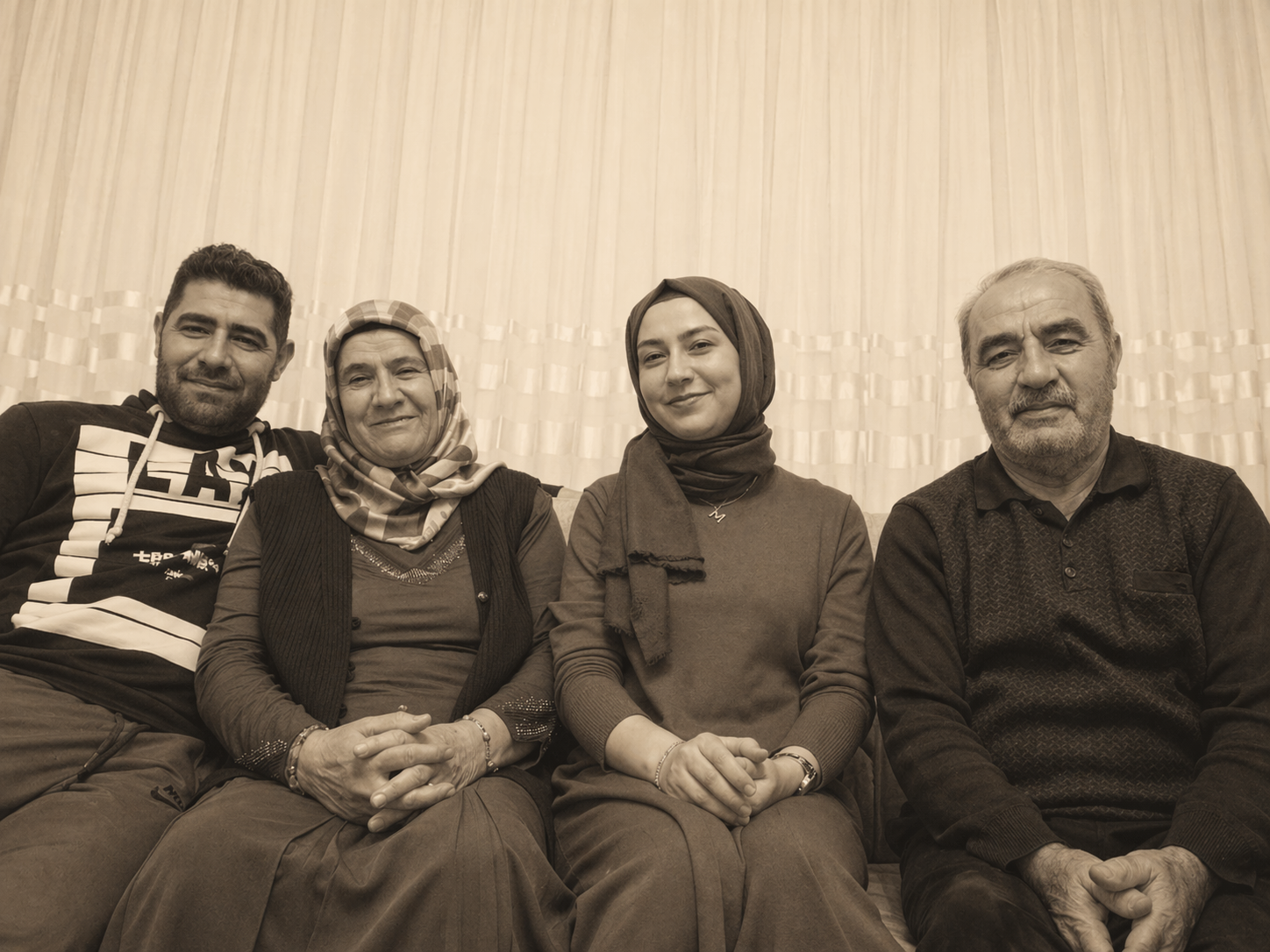
Those of us who could be there that day gathered together. Family doesn't always manage to be in the same place — some are kept away by work, by distance, by life abroad.
We took this photograph for them. For the ones who were elsewhere — in other countries, other cities, other lives. A way of saying: we are here, we are well, we are thinking of you.
A photograph can work like a letter sometimes. We smile here so they can see it there, and feel — just for a moment — a little closer to home.
 Adıyaman · 2026
2026, Adıyaman. Part of the family lives abroad. We took this photograph for them — to say: we are here.
— 2 —
Every life is full of stories — bittersweet, joyful, ordinary — all worth keeping.
Create your book — freeA look inside
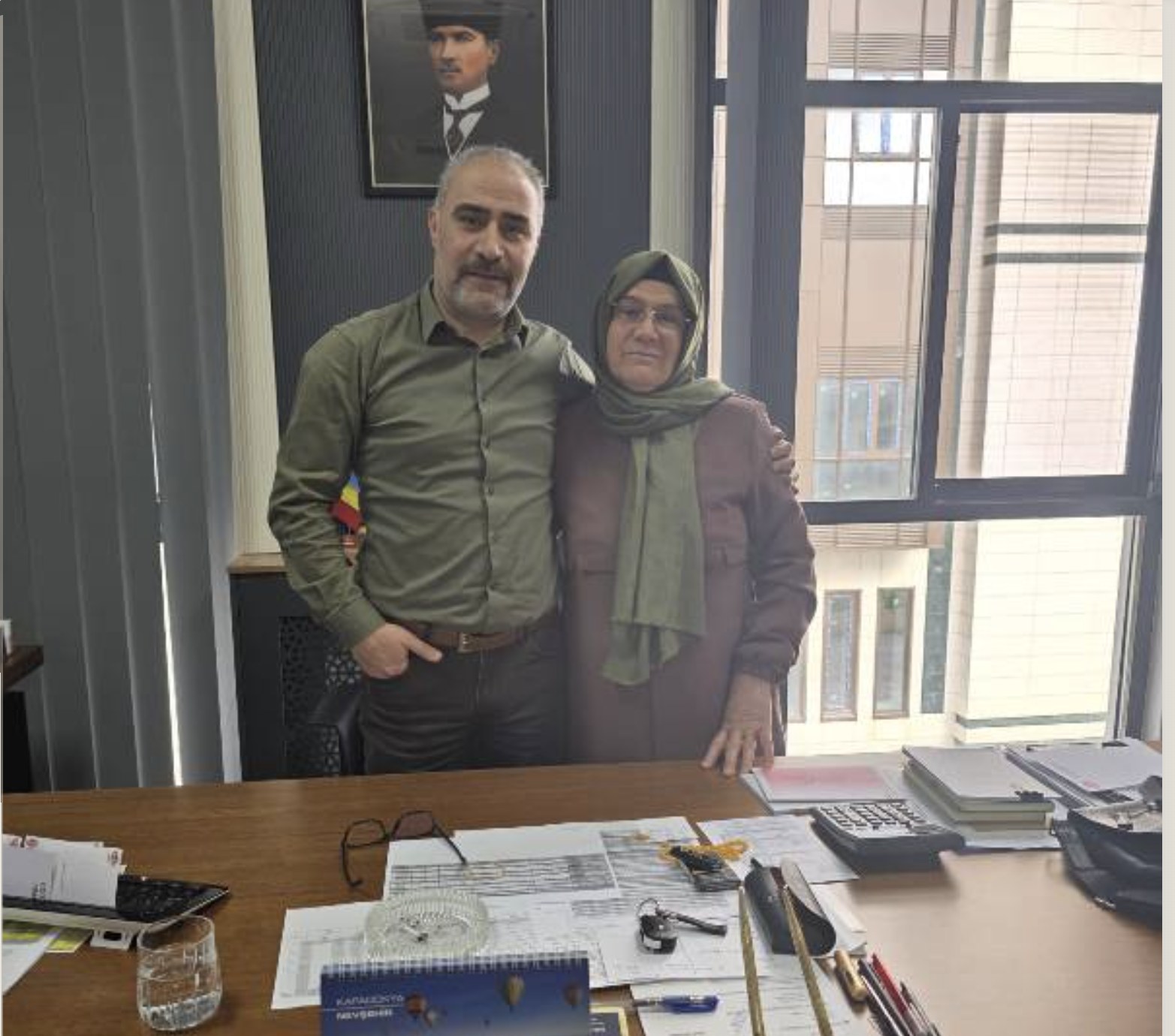
My brother's name sits in glass and metal at the corner of his desk — Ramazan Yavaş. Every time I see that nameplate, I think of the moment my mother stepped into her son's office in Gaziantep.
My mother in her green shawl, my brother close beside her, his shoulder leaning gently in. Both look at the camera; but behind those gazes is something else — the quiet relief of a mother walking into where her son works and asking "Are you here, are you well?"
She entered that office not as a guest, but as a mother. To see his desk, his pens, the view from his window. Sometimes love is this tangible.
Sometimes love is this tangible.
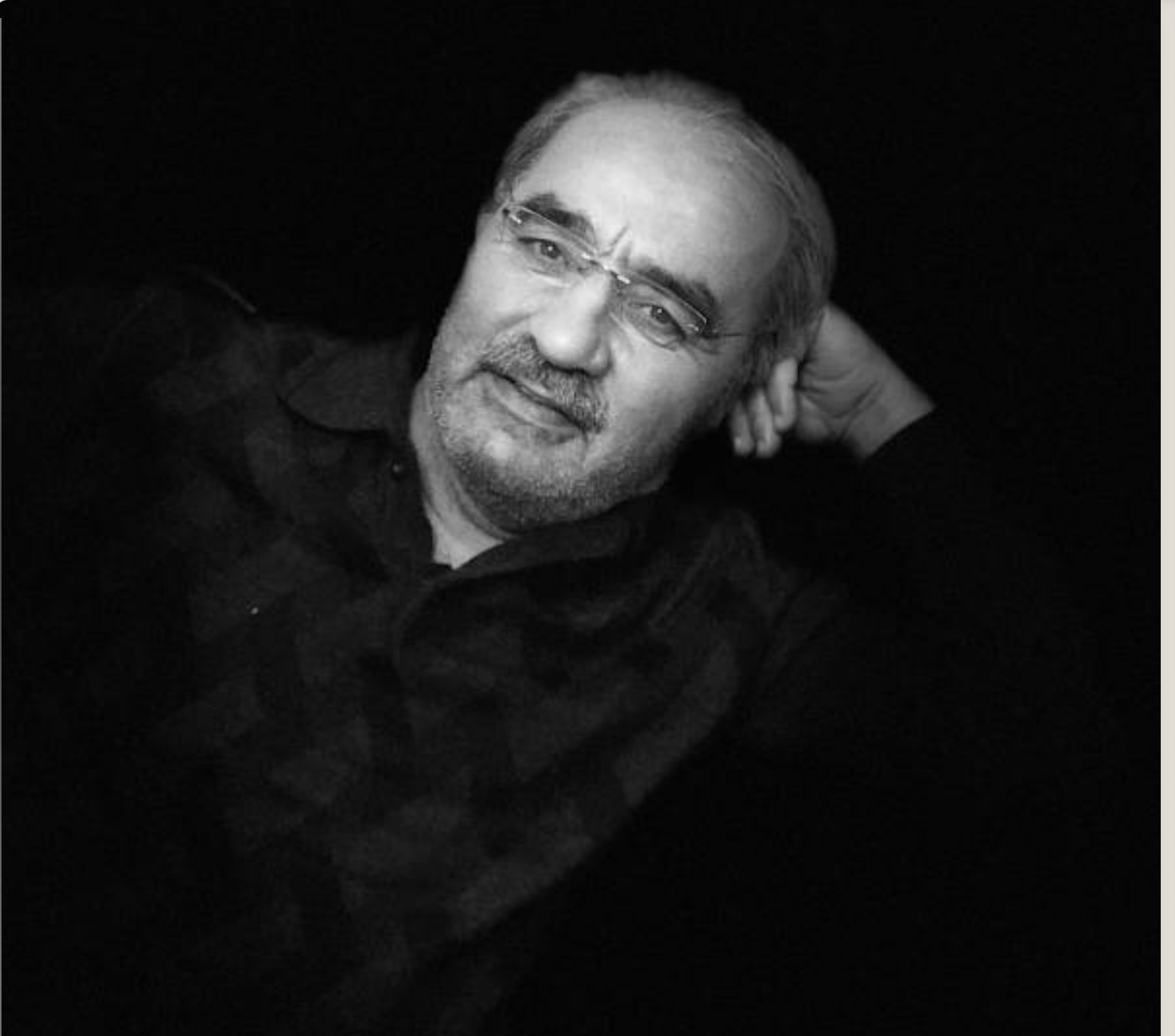
My father. Just thinking the word tightens my chest — like a warm, heavy longing.
The conditions of that era weren't easy. But my father gave up his own again and again to put us through school; his wishes, his comfort, perhaps even parts of his dreams, set quietly aside. He taught us what being a child meant — by living it, without a word of complaint. And he is still beside us, just the same. Years passed, conditions changed; but that wanting to give, that sacrifice, never wavered. Oh, my dear father.
He gave up his own — wishes, parts of his dreams, set quietly aside.
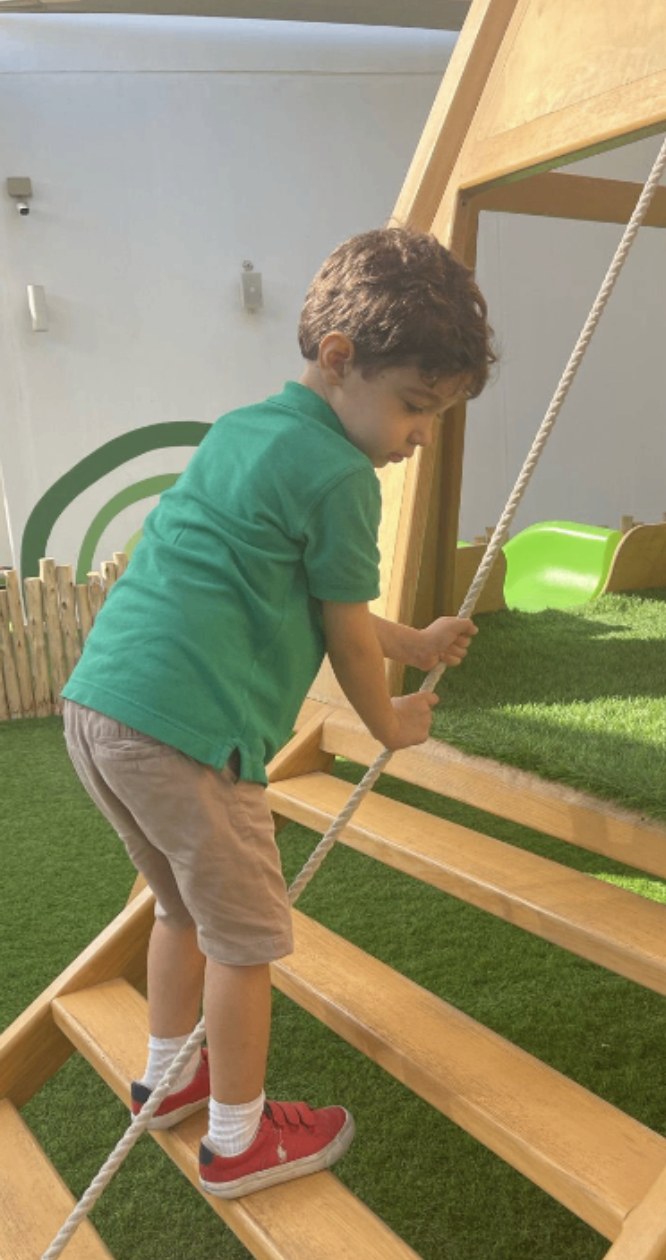
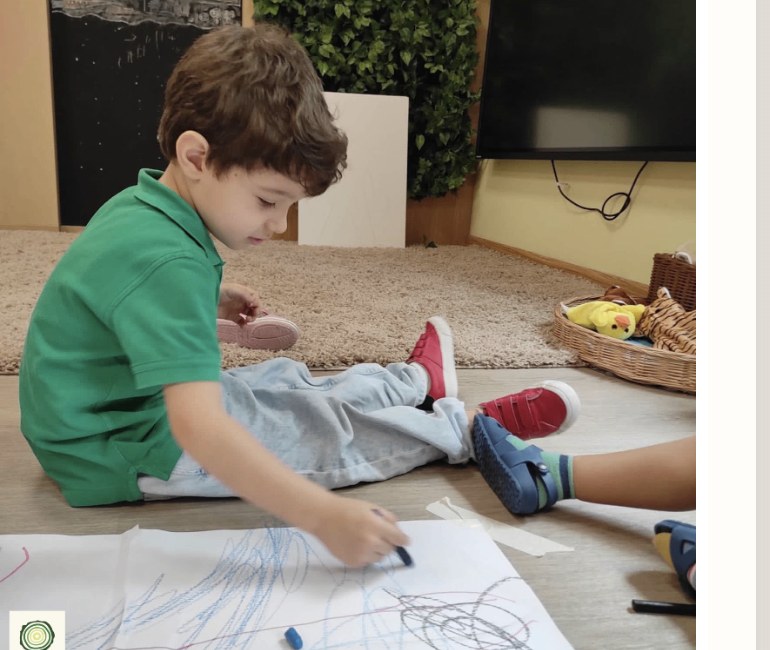
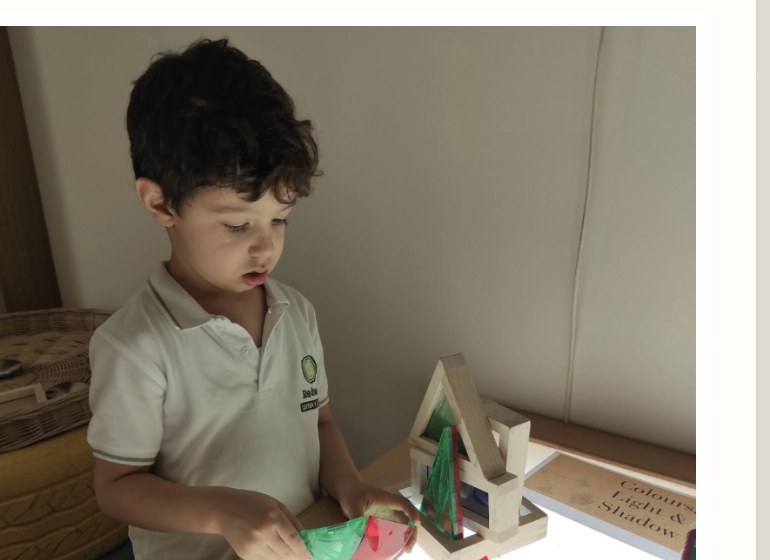
When we moved to Dubai, Bera Musab was still very small. A country he didn't know, a language he didn't know, faces he didn't recognize. On his first day of school, what I felt walking away is still hard to put into words.
But he, quietly, found his own way.
On the wooden climbing frame outside, holding the rope and stepping up rung by rung — that concentration on his face. No fear, no hesitation. In class, completely absorbed in a drawing on a huge sheet of paper. At the light table, those small hands moving so carefully through red and green glass.
The door I once couldn't leave without crying, he now walks through on his own. I'm proud of my son — not just for what he's achieved, but for staying himself through all this newness.
He isn't just enduring a new language; he's internalizing it, playing with it.
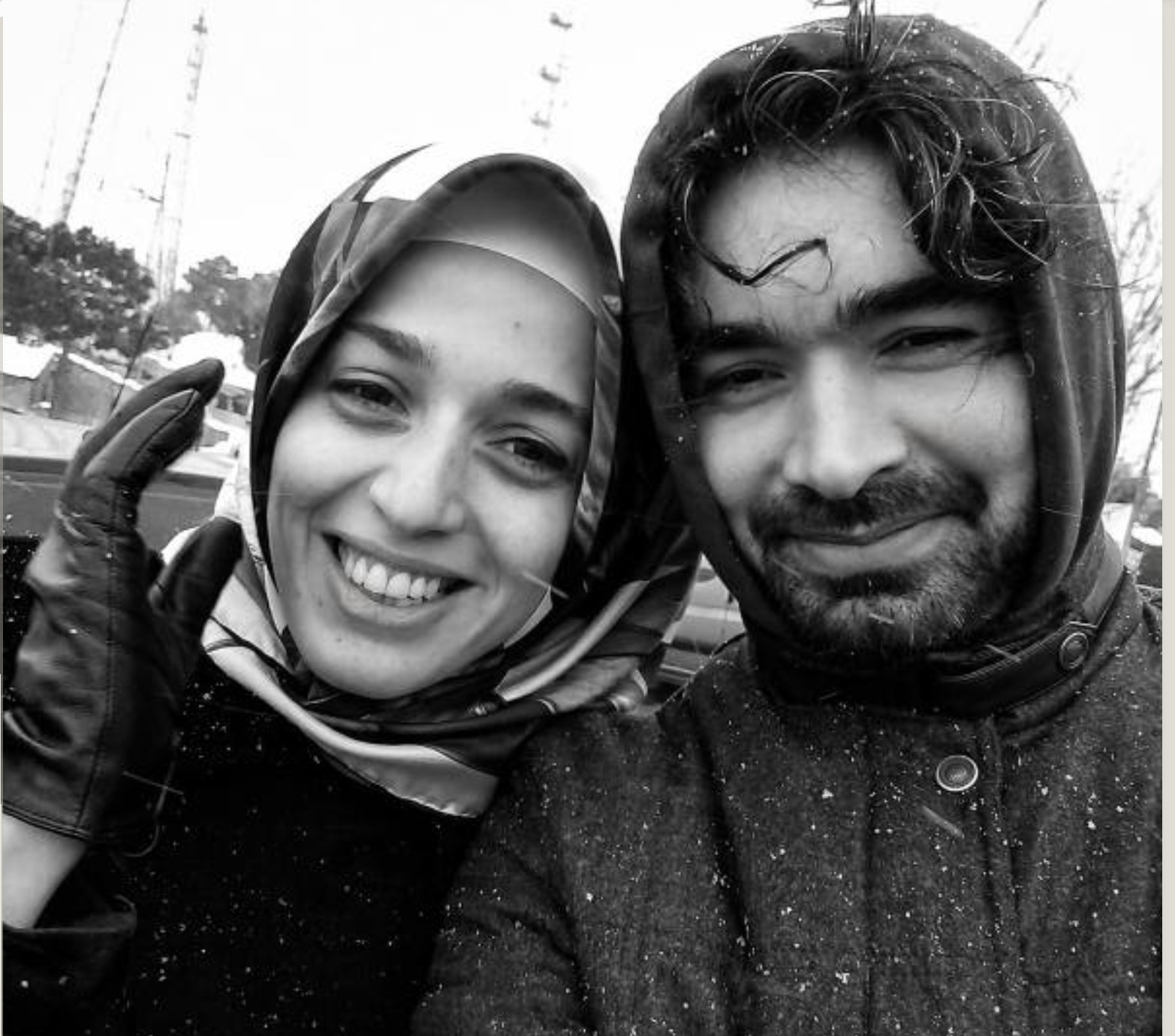
Snow was falling in Istanbul and we were both hunched against the cold; coat hoods up, gloves in our hands. Even as the wind whipped our hair I couldn't stop smiling. Beside my wife, snowflakes sticking to our cheeks, we stood in front of that familiar city skyline.
On days like this Istanbul looks different — grey sky, wet stones, cold air — but when someone you love is beside you, all of it somehow turns into warmth. That photo catches the dead centre of the moment: in freezing weather, leaning into each other, two people smiling at the world.
When someone you love is beside you, even the cold turns into warmth.
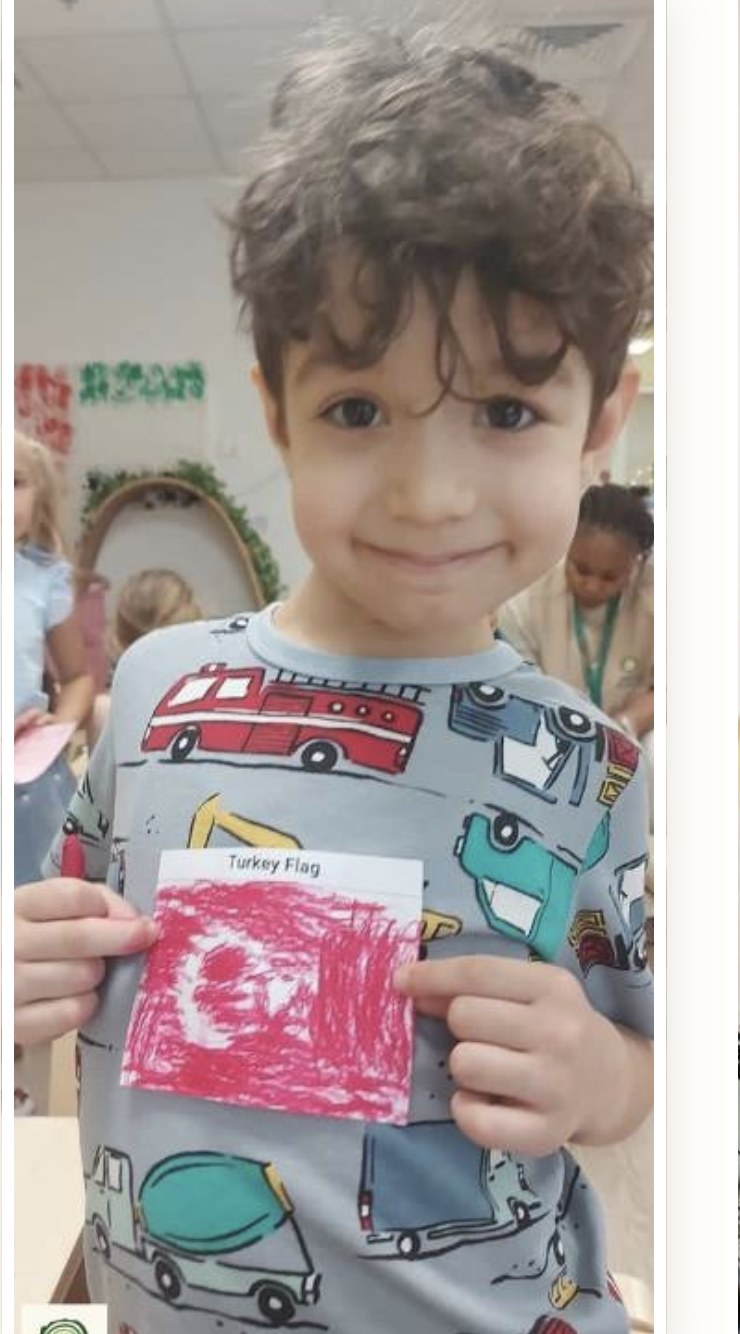
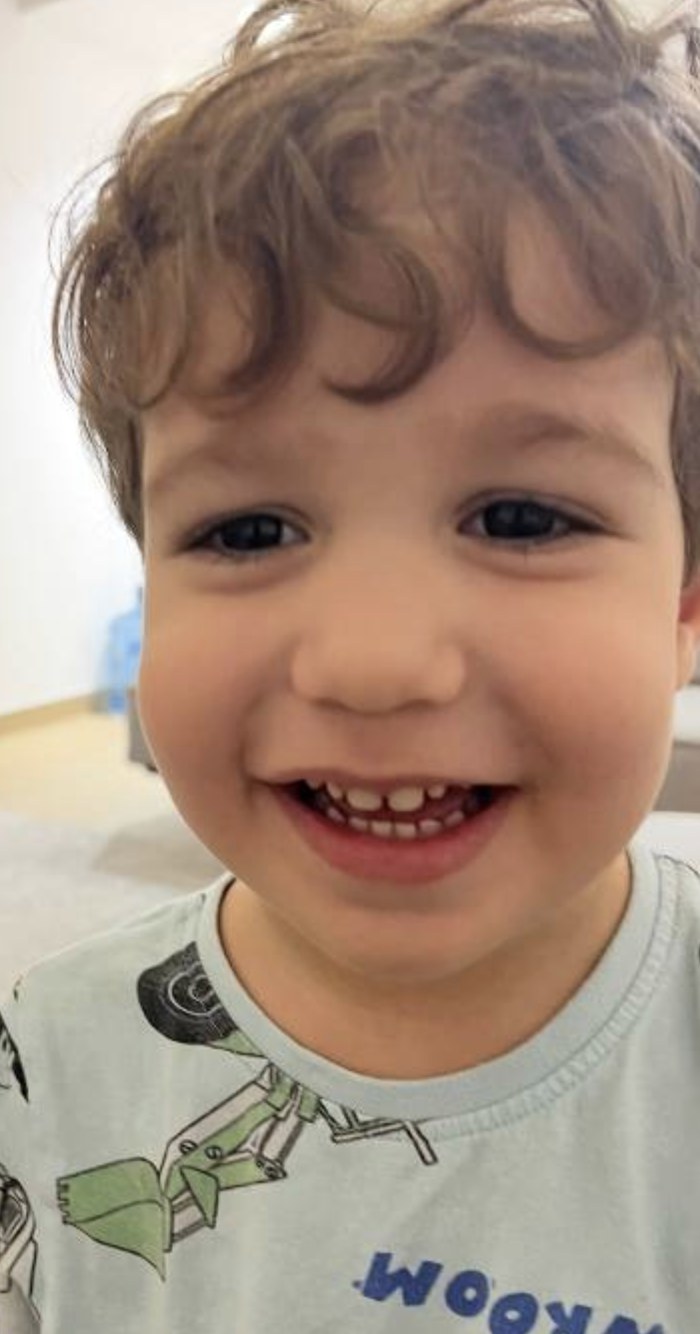
Which one was which, I paused for a moment. Looking at both photos at once I noticed how much Bera Musab and Efe resemble each other — same curly hair, same look, same smile. One holds up the Turkish flag he drew in red crayon, the other gives that familiar, warming laugh. Both are mine, each one a mirror of the other. How children like these came to be, sometimes even I'm surprised.
Both are mine, each one a mirror of the other.
My brother's name sits in glass and metal at the corner of his desk — Ramazan Yavaş. Every time I see that nameplate, I think of the moment my mother stepped into her son's office in Gaziantep.
My mother in her green shawl, my brother close beside her, his shoulder leaning gently in. Both look at the camera; but behind those gazes is something else — the quiet relief of a mother walking into where her son works and asking "Are you here, are you well?"
She entered that office not as a guest, but as a mother. To see his desk, his pens, the view from his window. Sometimes love is this tangible.
Sometimes love is this tangible.
My father. Just thinking the word tightens my chest — like a warm, heavy longing.
The conditions of that era weren't easy. But my father gave up his own again and again to put us through school; his wishes, his comfort, perhaps even parts of his dreams, set quietly aside. He taught us what being a child meant — by living it, without a word of complaint. And he is still beside us, just the same. Years passed, conditions changed; but that wanting to give, that sacrifice, never wavered. Oh, my dear father.
He gave up his own — wishes, parts of his dreams, set quietly aside.
When we moved to Dubai, Bera Musab was still very small. A country he didn't know, a language he didn't know, faces he didn't recognize. On his first day of school, what I felt walking away is still hard to put into words.
But he, quietly, found his own way.
On the wooden climbing frame outside, holding the rope and stepping up rung by rung — that concentration on his face. No fear, no hesitation. In class, completely absorbed in a drawing on a huge sheet of paper. At the light table, those small hands moving so carefully through red and green glass.
The door I once couldn't leave without crying, he now walks through on his own. I'm proud of my son — not just for what he's achieved, but for staying himself through all this newness.
He isn't just enduring a new language; he's internalizing it, playing with it.
Snow was falling in Istanbul and we were both hunched against the cold; coat hoods up, gloves in our hands. Even as the wind whipped our hair I couldn't stop smiling. Beside my wife, snowflakes sticking to our cheeks, we stood in front of that familiar city skyline.
On days like this Istanbul looks different — grey sky, wet stones, cold air — but when someone you love is beside you, all of it somehow turns into warmth. That photo catches the dead centre of the moment: in freezing weather, leaning into each other, two people smiling at the world.
When someone you love is beside you, even the cold turns into warmth.
Which one was which, I paused for a moment. Looking at both photos at once I noticed how much Bera Musab and Efe resemble each other — same curly hair, same look, same smile. One holds up the Turkish flag he drew in red crayon, the other gives that familiar, warming laugh. Both are mine, each one a mirror of the other. How children like these came to be, sometimes even I'm surprised.
Both are mine, each one a mirror of the other.
HOW LISMIL BEGAN
My children are still young. And we live abroad. I want to keep my parents' stories, the words they used, the way they spoke, somewhere — so that years from now my children, and their children too, can open the page and hear them.
Thirty years ago families gathered at the dinner table and the elders would tell grandchildren their lives in their own voices — it passed down naturally. I can't give my children that same chance. I want to keep their grandmothers' and grandfathers' voices, stories, and tones somewhere, so years from now they can still hear them.
"You have cameras, you have video — why a book?" I asked myself too. But searching through thousands of photos on a phone for "January 2023, Grandpa telling a story" is not something anyone actually does. It doesn't open, it doesn't get found, it gets lost. That's why Lismil is a book. You open the page, read the story, scan the QR — Grandpa's voice plays. The memory you were looking for, in your hand in three seconds.
The same goes for the lovely stories told at the family table. Everyone laughs, cries, forgets. By the next gathering nobody remembers. In Lismil, a voice note becomes a page in the book. Mom, dad, grandmother, grandchild — anyone can contribute. One book, many voices, a shared memory.
I started this book for my own children. I have my own book now; my parents add a piece every week. Maybe yours is about something else entirely — a trip, a friendship, a year you don’t want to lose. Whatever it is, Lismil is here for you, too.
I say that with a quiet sadness. For some families it may feel late — but a photograph, a story written down, an old letter scanned into a page still reaches another generation. Start with whatever you have.
— Bünyamin, founder
How it works
Start with a photo — AI handles the rest. If you want, layer on a tag (pick one or write your own), leave a short voice note, or jot a short line. All optional; every detail makes the story more truly yours.
AI turns your words into a beautifully written memory, in the right tone for your book.
Every entry adds a page instantly. Print anytime — every page has a QR that plays your voice.
WHY LISMIL
What we care about — quietly and on purpose.
FAQ
COMING SOON
Same voice, same QR, same care — these formats are on the way. We’ll let you know the moment they’re ready.
A whole book with your child at its heart — first words, that one laugh, the little nonsense stories they tell. In a voice you’ve allowed, so years from now you can still hear that tone.
A school year, a class full of children and a teacher. Everyone adds a page in their own voice — the year ends, the book stays.
Have a different kind of story in mind? A wedding, a journey, a special day — tell us, we’re listening.